Is Your Dirty Grill a Health Risk? What's Hiding in That Grease
In Amarillo, grilling isn't a seasonal hobby — it's part of life. Whether it's brisket on a Saturday afternoon, burgers during a backyard get-together, or steaks after a long week, the grill earns its keep. But here's the question most people don't stop to ask: when's the last time you actually cleaned it?
Not a quick scrape of the grates. A real deep clean.
Because while Amarillo's weather brings us great days for cooking outdoors, it also brings wind, dust, and temperature swings that turn a dirty grill into more than an eyesore. It becomes a legitimate health risk — right there on your patio.
The Fire Hazard Sitting on Your Deck
The National Fire Protection Association reports roughly 10,000 home grill fires every year in the U.S. — and roughly one out of every five is caused by a grill that simply wasn't cleaned.
Old grease builds up in the bottom of the firebox, on the burner tubes, and along the walls. That grease is fuel. One flare-up from dripping fat, and you've got a fire that's bigger than anything you planned on cooking.
In Amarillo, where dry conditions and steady winds are the norm, a grease fire can spread fast. If your grill sits on a wooden deck — common across the Panhandle — the risk goes up even more. A professional deep cleaning strips out that hidden fuel load so you're cooking, not firefighting.
Bacteria Doesn't Burn Off Like You Think
There's a myth that firing up the grill to high heat kills everything. It doesn't.
Old food particles and congealed grease are breeding grounds for salmonella, E. coli, and other bacteria. Some of these pathogens produce toxins that survive high temperatures — meaning you can char the outside of your chicken and still expose your family to foodborne illness because of what was already living on the grates.
A surface scrape doesn't reach the buildup inside burner tubes, grease channels, and drip pans. That's where bacteria thrive, protected from the heat, waiting to contaminate the next meal.
Carcinogens on Your Grates
When meat is cooked at high temperatures — especially over an open flame — two types of carcinogenic compounds form: heterocyclic amines (HCAs) and polycyclic aromatic hydrocarbons (PAHs).
HCAs develop when amino acids and creatine in meat react to intense heat. PAHs form when fat drips onto hot surfaces, creating smoke that coats the food.
Here's what matters for your grill: charred residue left on the grates and interior surfaces from previous cookouts contains these same compounds. Every time you cook on a dirty grill, you're layering fresh carcinogens on top of old ones. The National Cancer Institute has studied these chemicals for decades — the risk is real, and a clean cooking surface is the simplest way to reduce it.
Uninvited Guests: Rodents and Pests
It doesn't take much to turn your grill into a home for pests. A little grease, a few food scraps, and a covered grill that sits idle for a week or two — that's all rodents need.
Mice and rats carry diseases like hantavirus, leptospirosis, and salmonella through their droppings, urine, and nesting materials. And Amarillo has its share of critters looking for shelter — especially during colder stretches when grills go unused.
Even insects — roaches, ants, flies — are drawn to the grease and debris. They leave behind droppings and bacteria of their own. A grill that looks fine on the surface can be harboring serious contamination underneath.
The DIY approach — scrubbing what you can see and blasting the heat — doesn't sanitize what's buried deeper. A professional deep clean disassembles the interior, removes all the buildup, and leaves no place for pests to hide.
Why DIY Scrubbing Falls Short
Most grill owners do the same thing: heat it up, scrape the grates with a wire brush, and call it clean. That's fine for between-cook maintenance, but it ignores everything below the cooking surface.
Inside the firebox, grease hardens into a thick, stubborn layer. Burner ports clog. Drip trays overflow. Heat shields cake over. Getting to those areas takes time, the right tools, and a methodical process — exactly what a professional service is built for.
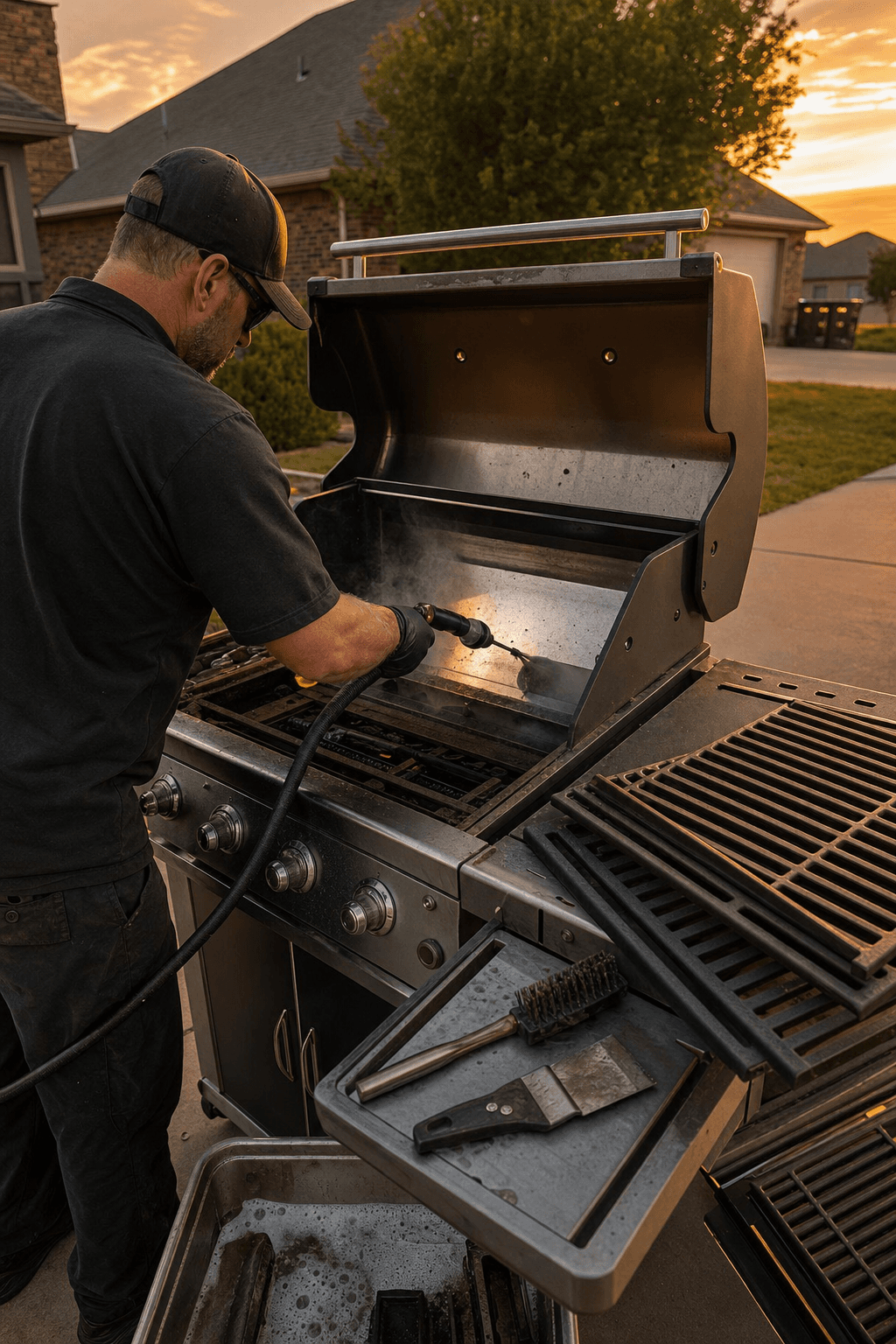
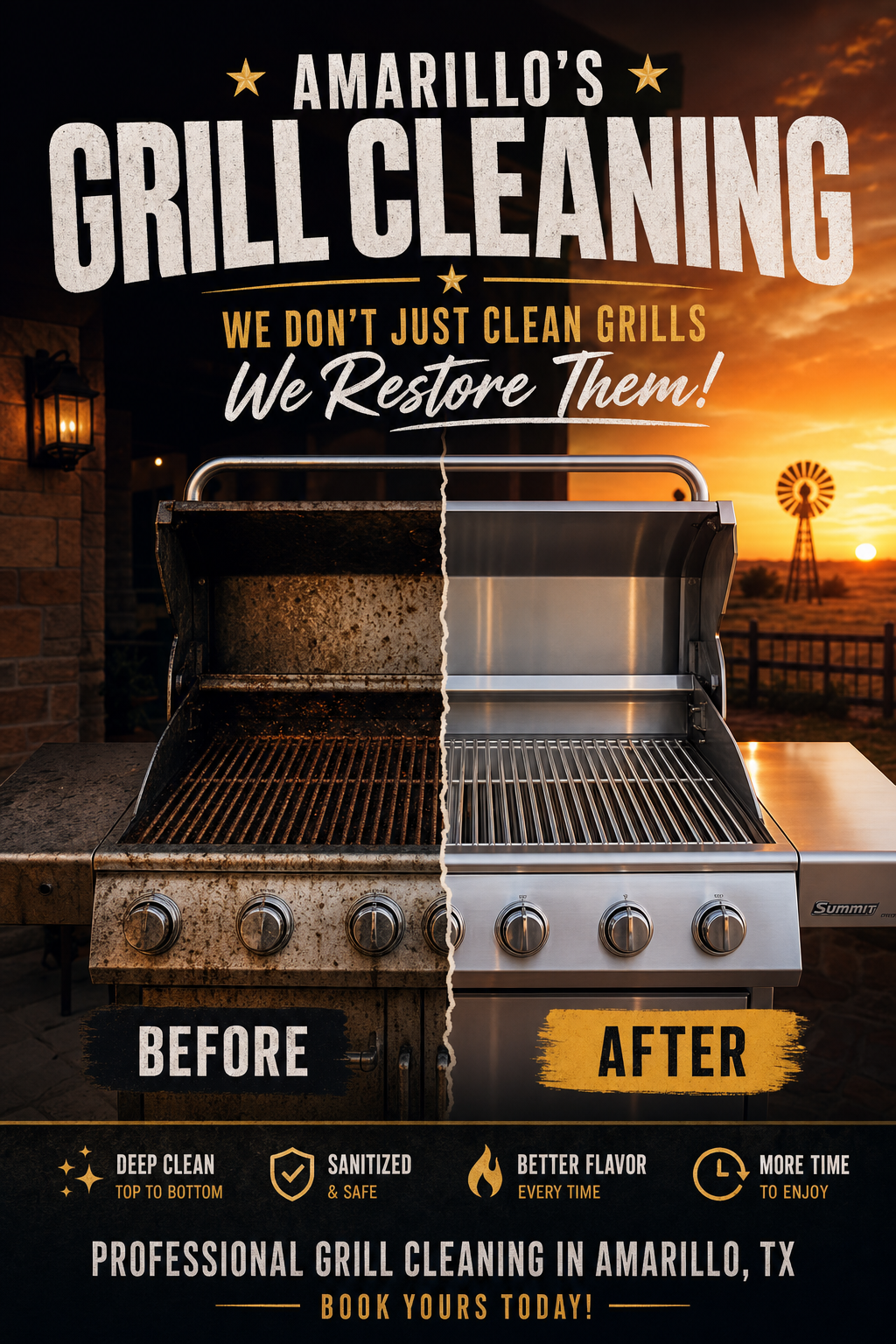
Amarillo Grill Cleaning LLC comes to your driveway anywhere across the Amarillo area — from The Colonies to City View to Bushland — with everything needed to strip out years of buildup, sanitize every component, and restore your grill to like-new condition. No hauling. No chemicals you don't want near your food. Just a thorough, on-site deep clean.
Better Cooking, Longer Equipment Life
Beyond the health risks, a dirty grill simply doesn't cook well. Uneven heat. Stubborn hot spots. Off-flavors from old grease smoking up into your food.
A clean grill means even temperatures, pure flavors, and meat that sears the way it's supposed to. It also means your equipment lasts longer. Grease corrodes metal over time. Burners work harder when ports are clogged. A professional cleaning extends the life of your investment — and in a place like Amarillo, where outdoor cooking is practically a year-round pursuit, that matters.
When to Book a Deep Clean in Amarillo
Good timing: before spring cookout season kicks into high gear, after a dusty West Texas summer, and before you winterize or put the grill into lighter rotation.
But the real answer is simpler: if you can't remember the last time your grill got more than a scrape-down, it's time.
Your grill feeds your family and brings your friends together. Don't let old grease, bacteria, carcinogens, and pests turn it into a risk. Book a professional grill cleaning with Amarillo Grill Cleaning LLC, or review our pricing to get started.
Call or text: 806-576-7213