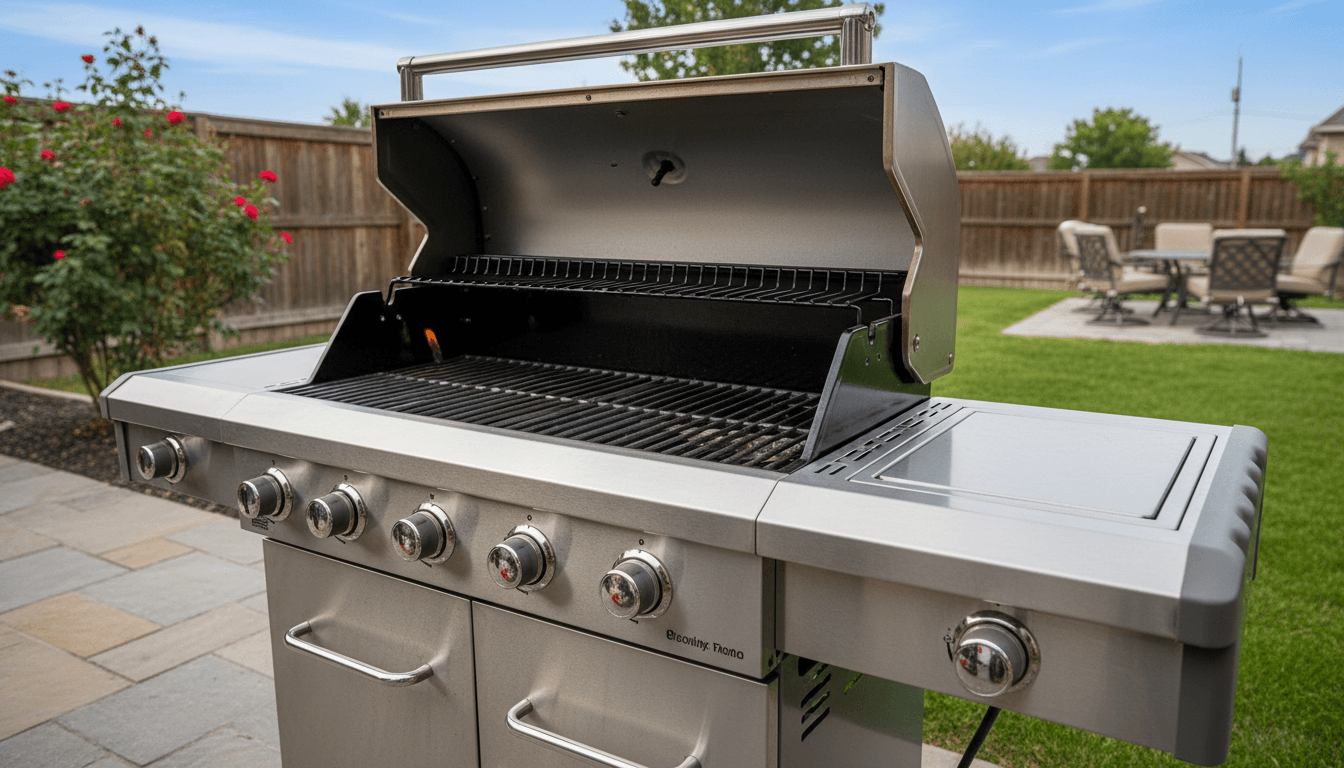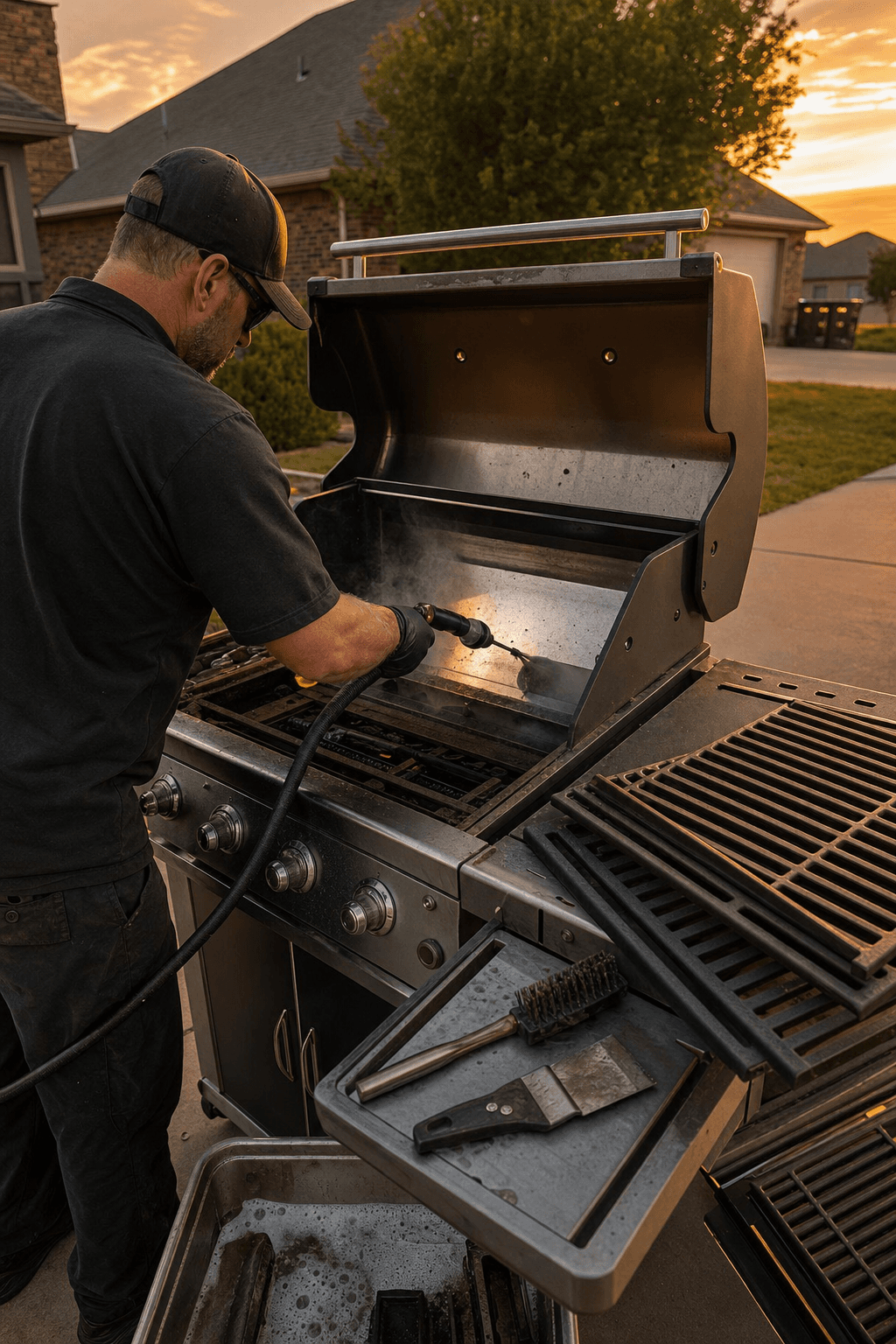
A standard how often to clean grill maintenance schedule requires brushing the grates after every use and performing a deep cleaning at least once or twice per year. Charcoal grills need additional attention to remove ash after each session; meanwhile, frequent cooks should inspect their gas burners and grease trays weekly to ensure optimal performance.
Most homeowners in the Texas Panhandle view grill cleaning as a chore reserved for the end of the season, but waiting that long often leads to stubborn grease fires and bitter, smoky flavors that ruin a premium steak. The high winds and fluctuating temperatures in Amarillo mean that dust and debris accumulate faster than you might expect; therefore, a reactive approach to maintenance is rarely sufficient. Maintaining a rigorous schedule is not just about aesthetics; it is about protecting your investment and ensuring every meal remains safe for your family. This guide breaks down the essential tasks you need to perform daily, monthly, and seasonally to keep your equipment in peak condition. You will also learn the specific differences between gas and charcoal care, along with the critical warning signs that indicate your system requires a professional restoration.
Why a Consistent Grill Maintenance Schedule Matters in the Texas Panhandle
In Amarillo, the backyard grill is the centerpiece of local weekend culture. Maintaining that equipment, however, involves more than a quick scrape of the grates. Living on the High Plains presents unique challenges that homeowners in shielded climates simply do not face. Our notorious Panhandle wind carries fine dust and grit that settles into every crevice of your barbecue. This sediment mixes with grease to create an abrasive paste that can clog burner ports and degrade internal components over time.
Understanding a how often to clean grill maintenance schedule specifically for our region is essential for three primary reasons. First, food safety is paramount; old residue can harbor bacteria and attract local pests. Second, consistent upkeep protects your investment. High quality grills are significant purchases, and preventing corrosion extends their lifespan by years. Finally, heavy carbonized buildup and old grease produce acrid smoke that ruins the flavor of your brisket or steaks.
While generic online guides exist, they often ignore the intense Texas sun and dusty atmosphere that bake grime onto exterior surfaces. For those who want to ensure their equipment is handled correctly, professional grill cleaning and restoration services offer a level of detail that accounts for these local environmental factors. Proper care ensures your grill performs optimally regardless of the harsh Amarillo elements.
Daily Maintenance: What to Do After Every Grilling Session
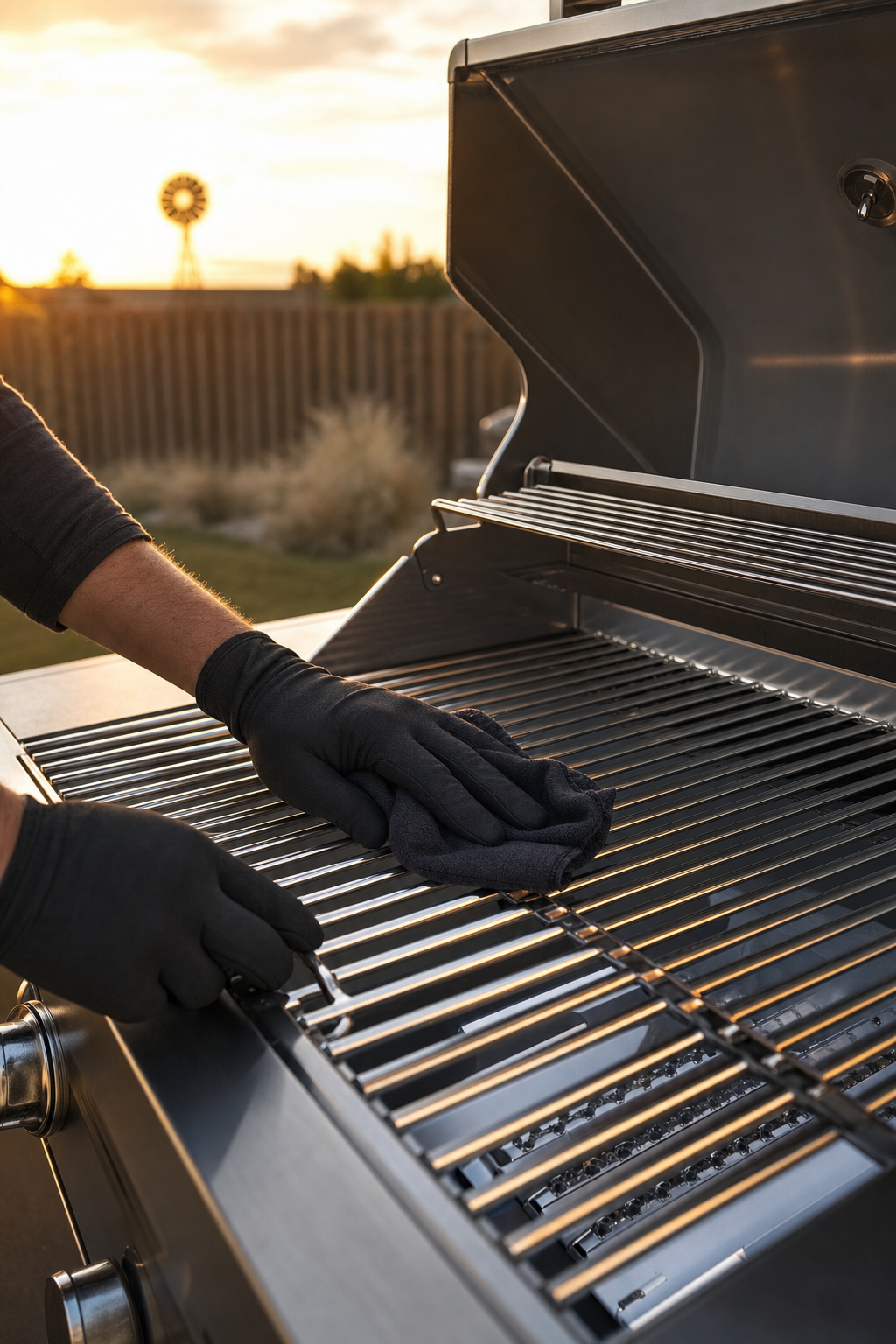
Consistent upkeep starts the moment you pull your meat off the heat. While some backyard chefs wonder if they truly need to clean their equipment after every session, the answer is a definitive yes for specific tasks. Integrating a few immediate steps into your how often to clean grill maintenance schedule prevents proteins and fats from bonding with the metal, which makes future cleaning significantly harder and invites local pests to your patio.
Start with the burn-off method. Once your food is resting, turn all burners to high and close the lid for approximately 15 minutes. This intense heat carbonizes food particles and drippings, turning them into a brittle ash that is much easier to remove. After the time has elapsed, use a high quality stainless steel brush or a contoured wood scraper to scrub the grates while they are still warm. Warm metal releases debris more readily than cold metal; this prevents the stubborn, fossilized buildup that often requires professional grill cleaning and restoration services to rectify.
Finally, inspect the drip pan or grease tray. In the Amarillo heat, grease can turn rancid quickly and attract rodents or insects. If the tray is more than half full, empty it immediately. Keeping this area clear is your best defense against dangerous grease fires and unexpected flare-ups during your next cookout. Developing these three habits, the burn-off, the warm scrub, and the tray check, ensures your equipment remains safe and functional between more intensive monthly sessions.
The Monthly Deep Clean: Keeping Grease at Bay
For residents who fire up the BBQ two or three times a week, daily habits provide a necessary baseline, but they cannot reach the hidden grease reservoirs that accumulate over time. A monthly deep clean is the most critical component of a how often to clean grill maintenance schedule for active cooks. This process requires moving beyond the surface to ensure the internal mechanics remain functional and safe.
Begin by removing the cooking grates entirely to gain access to the heat deflectors or flavorizer bars. These components are designed to protect the burners and distribute heat, but they also collect the majority of food drippings. When grease and carbon build up on these shields, they lose their ability to radiate heat evenly and become a primary source of uncontrollable flare-ups. Scrape away the heavy deposits with a putty knife and inspect the metal for signs of thinning or rust holes that might indicate it is time for a replacement.
While the internal components are exposed, perform a specific check on the venturi tubes. In the Amarillo area, these small pipes are notorious for attracting spiders and collecting fine High Plains dust. A single spider web or a plug of grit can obstruct gas flow, forcing the fuel to back up and ignite behind the control panel. Use a venturi brush or a small pipe cleaner to ensure these passages are clear of obstructions. This simple step is vital for maintaining the correct air-to-gas ratio, which prevents the yellow, flickering flames that cause heavy soot on your cookware.
Finish the monthly session by treating the exterior of the unit. The intense Texas sun can bake grease splatters and environmental grime into the finish, leading to permanent staining or pitting. Apply a high quality stainless steel cleaner to the hood and side shelves, wiping with the grain of the metal to restore the luster. If the buildup has reached a point where DIY scrubbing is no longer effective, professional grill cleaning and restoration services can strip away the carbonized layers and return the appliance to its original state.
Seasonal Specifics: Preparing Your Grill for Amarillo Winters and Springs

In Amarillo, winter does not signal the end of barbecue season; it simply shifts the focus of your how often to clean grill maintenance schedule. While the High Plains temperatures drop, many local pitmasters continue to cook year round. The primary challenge during North Texas winters is protecting the unit from moisture, snow, and ice. Invest in a heavy duty, weather resistant cover that fits your specific model securely. A loose cover can catch the notorious Panhandle wind and act like a sail, potentially tipping the grill or allowing abrasive dust and moisture to swirl underneath.
Spring requires a specialized reawakening inspection before your first major cookout. As the weather warms, it is common to find that local pests have nested inside the firebox or control panel to escape the winter chill. Check for rodent droppings, spider webs, or debris that could ignite. More importantly, inspect your gas lines and rubber hoses for cracks. The extreme temperature fluctuations common in Amarillo cause materials to expand and contract rapidly, which often leads to brittle components and dangerous gas leaks.
If your equipment has sat idle through a particularly dusty spring storm, a standard wipe down may not be enough. Fine grit can penetrate the igniter housing and burner ports. This is an ideal time to contact us for a quote for a seasonal inspection. Taking these steps ensures that the transition from winter storage to spring grilling is safe and that your investment remains protected against the unique environmental stressors of the Texas Panhandle.
Gas vs. Charcoal: Does the Cleaning Frequency Change?
The mechanics of your fuel source dictate the specific cadence of your how often to clean grill maintenance schedule. While both systems require a post-cook grate scrubbing, the underlying maintenance priorities differ significantly between gas and charcoal units.
For enthusiasts wondering how often to clean charcoal grill setups, the primary concern is ash management. Ash is naturally hygroscopic, meaning it absorbs moisture from the atmosphere. When left in the bowl, particularly during humid Amarillo mornings or after a light rain, ash turns into a corrosive paste that can eat through steel and iron. You should remove cold ash after every single use to prevent this moisture trap from causing premature rust in the bottom of your kettle. This is especially vital in the Panhandle, where wind can easily scatter lingering ash into your outdoor living space.
Gas grills, conversely, involve more complex internal components that demand precision cleaning. Instead of managing ash, you are fighting grease and grit that infiltrate the burner tubes and igniter assemblies. Fine Amarillo dust settles into burner ports, causing the gas to flow unevenly and resulting in inefficient heating. While you do not have to empty a tray every time you cook, you must inspect the burners and heat plates monthly to ensure no blockages are forming. If you notice a drop in performance, professional grill cleaning and restoration services can help clear these internal obstructions that are often difficult to reach with standard consumer tools.
Three Signs Your Grill is Overdue for a Professional Restoration
Even with a diligent routine, specific indicators suggest that your how often to clean grill maintenance schedule has reached a point where standard DIY methods are insufficient. These red flags often point to deep seated grease and carbonization that require industrial grade tools and techniques to rectify.
Persistent Black Smoke: If your grill continues to billow thick, acrid black smoke long after the initial 15 minute preheat, you are likely dealing with a grease fire waiting to happen. This smoke is not adding flavor; it is the result of old drippings and carcinogenic buildup burning off the floor of the firebox or the undersides of the heat plates.
Yellow Flames and Cold Spots: High performance burners should produce a steady blue flame with occasional yellow tips. Large, lazy yellow flames or areas where the grates simply will not get hot indicate that the burner ports are severely obstructed by carbon or Amarillo’s fine silt. This uneven heating ruins temperature control and wastes fuel.
Carbon Flakes on Food: Many homeowners are alarmed to see black, papery flakes falling onto their steaks, fearing the lid's paint is failing. In reality, these are flakes of carbonized grease and soot that have bonded together and are now shedding.
When these signs appear, basic scraping is no longer enough to ensure food safety or equipment performance. Our team at Amarillo Grill Cleaning LLC specializes in professional grill cleaning and restoration services that strip away these hazardous layers. We restore your unit to like new condition, ensuring every internal component is clear of obstructions and every surface is sanitary for your next cookout.
The Annual Professional Inspection and Deep Clean
A comprehensive annual visit is the non-negotiable anchor of a proper how often to clean grill maintenance schedule. While monthly upkeep manages surface grease, a professional technician performs a full teardown that goes far beyond the reach of a backyard scraper. Our process focuses on degreasing the entire firebox, removing the deep layers of carbonized fat that pose a serious fire risk and cannot be eliminated with consumer grade brushes.
During this annual service, we perform a critical safety inspection of all gas connections, valves, and manifold systems. In the Panhandle, where thermal expansion can loosen fittings or stress hoses, this check is vital for leak prevention. We conclude the process by polishing the exterior to a mirror finish, protecting the stainless steel from the oxidizing effects of the Texas sun. For a fraction of the cost of replacing a $1,500 premium unit, our professional grill cleaning and restoration services ensure your investment remains a centerpiece of your patio for a decade or more. You can check our pricing for grill maintenance to see how a yearly appointment protects your equipment while contact us for a quote to secure your spot before peak grilling season begins.
Maintaining a consistent cleaning schedule is the best way to ensure your grill remains safe and efficient for years of outdoor cooking. While regular upkeep is manageable on your own, an annual deep clean delivers the lasting results worth investing in. Explore our professional grill cleaning and check pricing to keep your backyard BBQ in top shape.